
Florida Criminal Court Records Search
Florida Criminal Court Records are public documents kept by the 20 Circuit Courts across the state. These courts handle all felony cases, juvenile matters, and serious criminal charges. You can search Florida Criminal Court Records online through the state court portal or in person at the Clerk of Court office. Each county maintains its own records. The Florida Courts official website provides access to case information and dockets. Most records are open to the public under Chapter 119 of the Florida Statutes.
Florida Criminal Court Records Quick Facts
Where to Find Florida Criminal Court Records
Florida Circuit Courts serve as the main source for Florida Criminal Court Records. The state has 20 judicial circuits. Each one covers one or more counties. These courts hold general jurisdiction. They hear all felony criminal cases in Florida. They also handle juvenile delinquency, dependency cases, and major civil matters. The majority of jury trials in Florida take place in circuit courts. Each circuit has a chief judge who acts as the administrative officer. This judge reports to the chief justice of the Florida Supreme Court.
The Florida Courts official website provides a central portal for accessing court information. You can visit Florida Courts to find links to all 20 circuits. The site offers ACIS, which stands for Appellate Case Information System. This tool lets you search dockets and documents from the Supreme Court and District Courts of Appeal. You can also find self-help resources for people handling their own cases. The site has family law forms and guides to court services across Florida.
Each county has a Clerk of Court who keeps the actual case files. The Florida Court Clerks and Comptrollers Association provides a statewide directory. You can visit Florida Court Clerks to find your local clerk. These offices perform nearly 1,000 statutory duties. They keep records for the judicial system and county government. You can search official records, pay fines, and get jury duty info through these offices. The clerks work with state partners to support public safety and access to justice in Florida.
You can learn more about the Florida court structure by visiting the official state courts page. The site shows how trial courts and circuit courts work together.
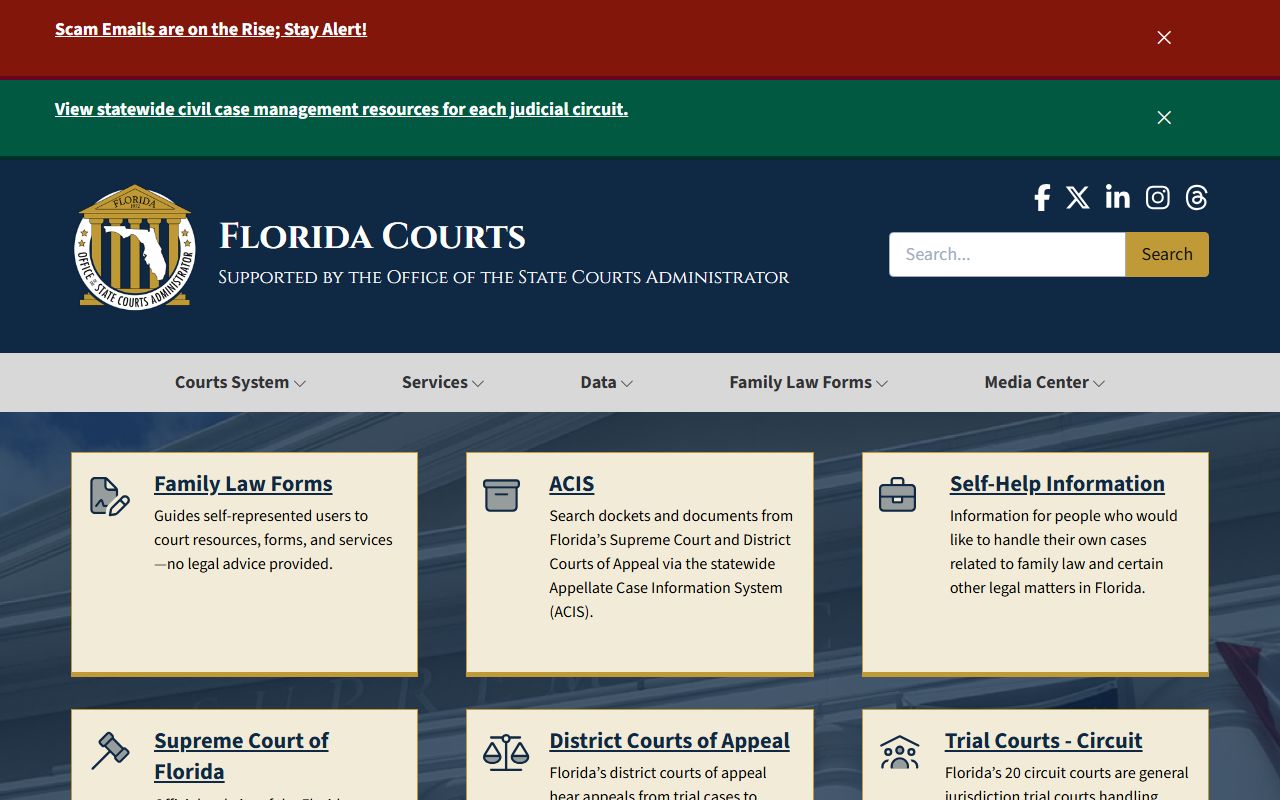
This page provides access to all court levels and explains how Florida Criminal Court Records flow through the system.
How to Search Florida Criminal Court Records Online
Searching Florida Criminal Court Records online is fast and easy. You can look up cases from home at any time. The Florida Courts system offers several ways to access records. Many circuits have their own online portals. Some use shared systems. You can search by name, case number, or date range. Results show case status, hearing dates, and party names. Some systems also show document images for a fee.
To start your search, first identify the correct circuit. Florida has 20 circuits covering all 67 counties. Circuit 1 serves Escambia, Okaloosa, Santa Rosa, and Walton counties. Circuit 4 covers Clay, Duval, and Nassau. Circuit 6 includes Pasco and Pinellas. Circuit 9 handles Orange and Osceola. Circuit 11 covers Miami-Dade. Circuit 13 serves Hillsborough. Circuit 15 covers Palm Beach. Circuit 17 handles Broward. Circuit 20 includes Charlotte, Collier, Glades, Hendry, and Lee. You can find links to each circuit website through the main Florida Courts portal.
Each circuit website offers different search tools. Some require registration. Others allow guest access with limited results. Most charge fees for detailed reports or document copies. You can pay by credit card or debit card online. In-person searches at the clerk office are free to view. Copy fees apply if you want paper records. Certified copies cost more than regular copies. Call ahead to check hours and requirements before visiting any court in Florida.
Note: Online records may not show sealed or expunged cases, as these are removed from public view under Florida law.
Types of Florida Criminal Court Records
Florida Criminal Court Records include many types of documents. Each case generates a file with charges, motions, and court orders. Felony cases form the bulk of criminal records. These include serious crimes like burglary, robbery, and drug trafficking. Misdemeanors handled at the circuit level also appear in these records. Juvenile delinquency cases stay in separate files with restricted access. The court system uses different security levels for viewing records online.
The Florida Court Clerks manage these records daily. You can see the scope of their work by visiting their association website.
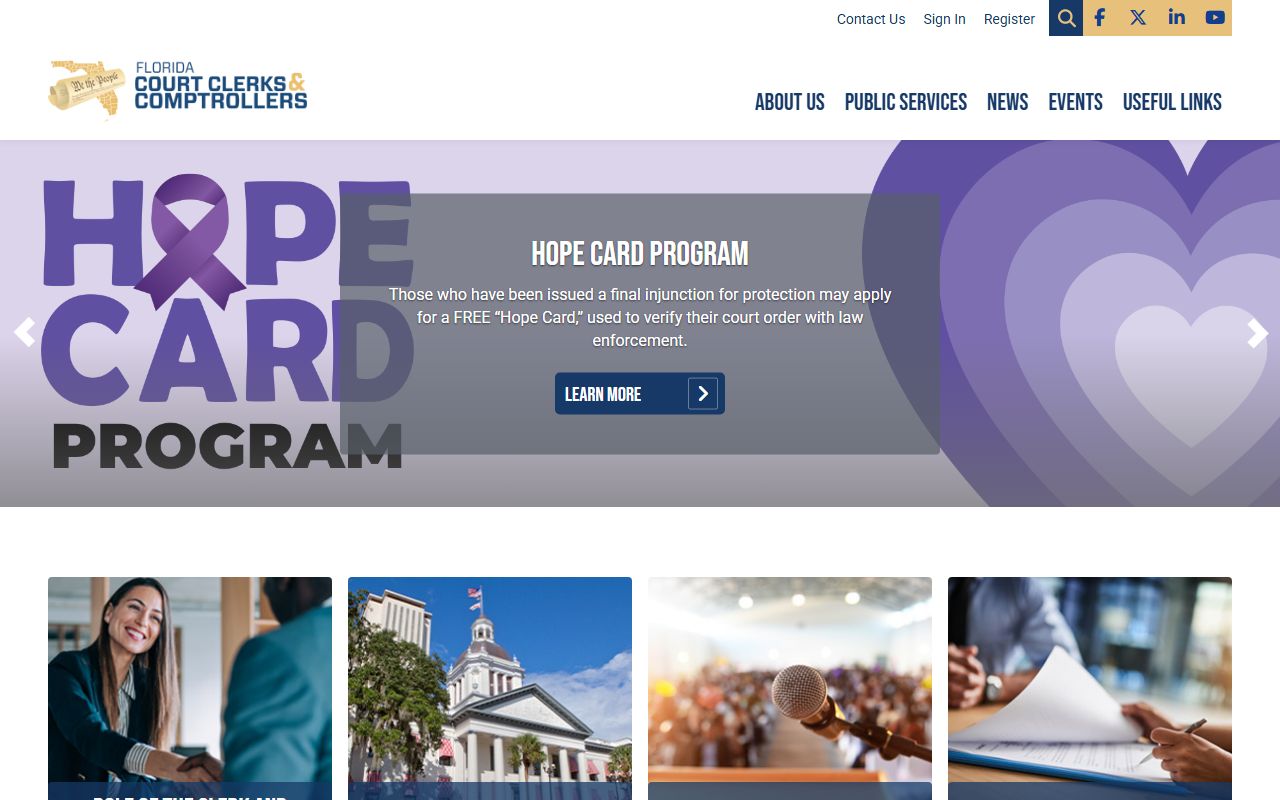
This site helps you find the right clerk office for any county in Florida.
Case files typically contain the following items:
- Arrest reports and charging documents
- Defendant name and case number
- Court dates and hearing schedules
- Judge and attorney names
- Disposition and sentencing details
- Bond and release conditions
Some records are confidential under Florida Rule of Judicial Administration 2.420. Adoption records remain sealed. Juvenile records have limited access. Mental health and substance abuse cases stay private. Guardianship files are not public. Domestic violence injunctions hide certain facts. Crime victim information is protected under Marsy's Law. The rule sets 14 levels of access for online court records. Not all users can see all types of records in Florida.
Florida Public Records Laws for Criminal Court Records
Florida has strong public records laws. Chapter 119 of the Florida Statutes governs access to government documents. Section 119.01 states that all state, county, and municipal records are open for inspection. Any person can view or copy these records. Providing access is a duty of each agency. This law applies to Florida Criminal Court Records held by the courts.
Section 119.07 covers inspection and copying rules. Custodians must let people view records at reasonable times. Access must occur under reasonable conditions. The custodian supervises all inspections. You do not need to give a reason for your request. You do not need to identify yourself. The law presumes all records are open unless a specific exemption applies.
Section 119.0714 deals with court files and records. It states that court files are public unless closed by court order. This means Florida Criminal Court Records are generally open. Case files, dockets, and judgments are available to anyone. Some documents may have redacted information. Financial account numbers and personal data may be hidden. The clerk handles these redactions before releasing records.
The full text of Chapter 119 is available for review at the Florida Legislature website.
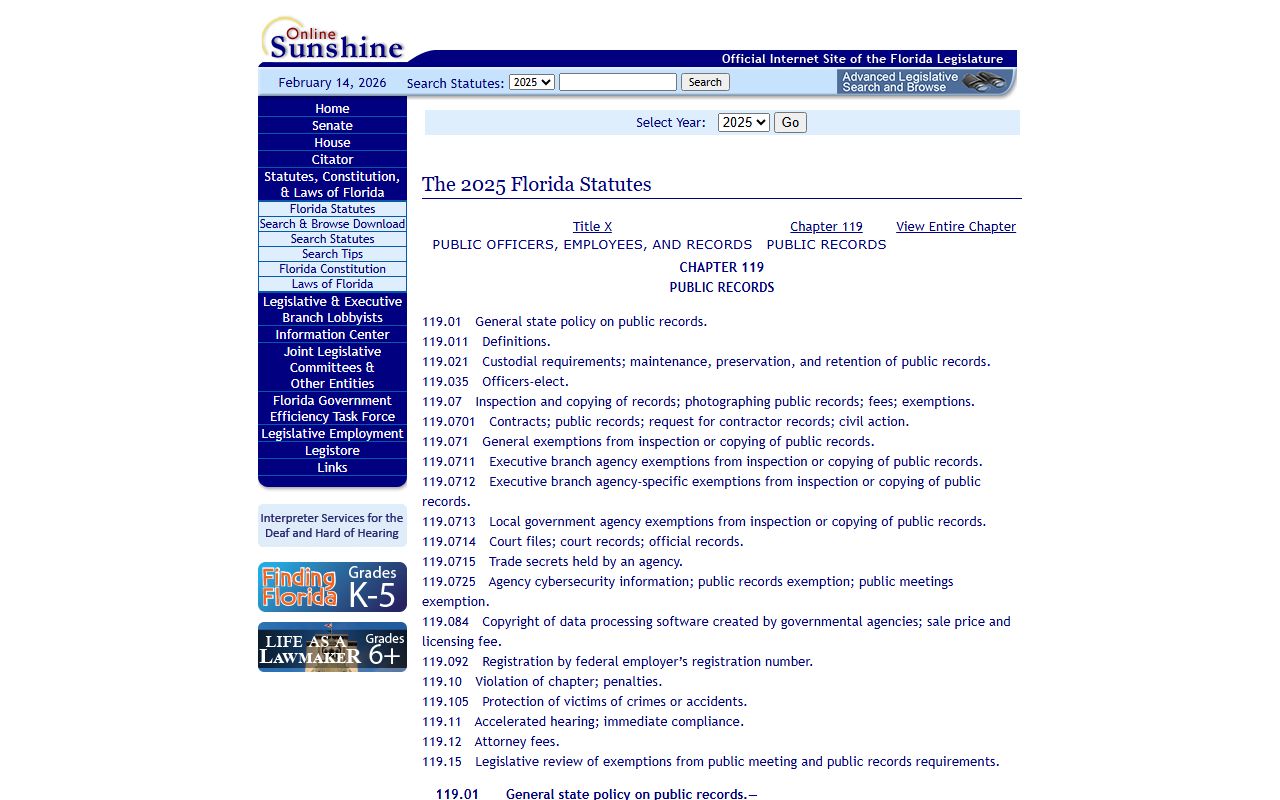
This page contains the complete public records statute that governs access to Florida Criminal Court Records.
Understanding the Florida Court System
Florida has a two-tier trial court system. The circuit courts form the upper tier. They hold general jurisdiction. This means they can hear any type of case. County courts form the lower tier. They handle less serious matters. Circuit courts hear all criminal felonies. They also handle civil cases over $50,000. Family law, probate, and guardianship cases go to circuit courts. County courts handle misdemeanors and small civil claims.
The circuit court structure spans the entire state. Each circuit covers a specific geographic area. Some circuits serve just one large county. Others serve several smaller counties together. Circuit 11 serves only Miami-Dade County. Circuit 20 serves five counties in southwest Florida. The chief judge in each circuit manages court operations. This judge assigns cases and schedules trials. They work to ensure fair and timely justice.
Appeals from circuit courts go to District Courts of Appeal. Florida has five district courts. The Supreme Court of Florida sits at the top. It hears cases of great public importance. Most people searching for Florida Criminal Court Records start at the circuit level. This is where felony trials occur. This is where the detailed records are kept.
Note: County courts handle some criminal matters, but all felonies start in circuit court in Florida.
FDLE Criminal History Records in Florida
The Florida Department of Law Enforcement maintains statewide criminal history records. FDLE serves as the central repository for Florida. They collect records from all counties. They provide background checks for a fee. Each search costs $24. You must pay by debit or credit card. FDLE offers CCHInet for self-service searches. This system lets you search their database online.
FDLE checks show Florida criminal history only. They include arrests, charges, and dispositions. The records come from law enforcement and courts across the state. Some records may not appear. Sealed or expunged records are removed from public view. Recent arrests may take time to appear. The system updates regularly but is not instant.
FDLE checks differ from court record searches. Court records show case details from one county. FDLE records show arrest history from all of Florida. You may need both types of searches. Court records show the full case file. FDLE records show the arrest and conviction history. Each serves a different purpose.
You can start an FDLE search by visiting their criminal history page.
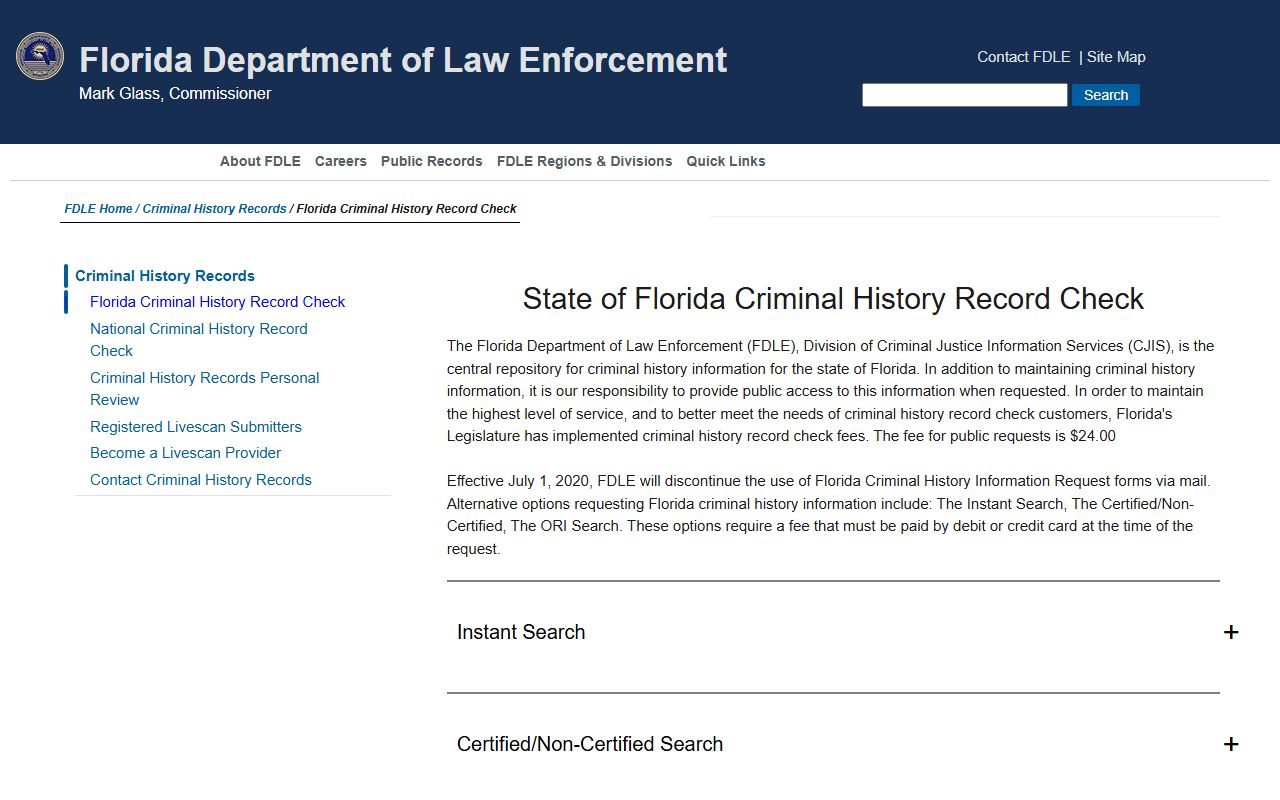
This portal allows you to request official criminal history checks from the state repository.
Accessing Florida Criminal Court Records by Circuit
Each of the 20 judicial circuits maintains its own records. You should search the circuit where the case was filed. This is usually the circuit where the crime occurred. It may also be where the defendant lives. Some circuits offer better online access than others. Large circuits like Miami-Dade and Broward have robust search systems. Smaller circuits may require phone or in-person requests.
Here are links to major circuit court websites:
- Circuit 1 - Escambia, Okaloosa, Santa Rosa, Walton
- Circuit 4 - Clay, Duval, Nassau
- Circuit 6 - Pasco, Pinellas
- Circuit 9 - Orange, Osceola
- Circuit 11 - Miami-Dade
- Circuit 13 - Hillsborough
- Circuit 15 - Palm Beach
- Circuit 17 - Broward
- Circuit 20 - Charlotte, Collier, Glades, Hendry, Lee
Visit the Florida Courts main page to find links to all 20 circuits. Each site lists contact info, hours, and search options. Some circuits use the same case management system. Others have their own platforms. You may need to create accounts on multiple sites. Fees and search methods vary by circuit. Always check the specific rules for the court you need.
Browse Florida Criminal Court Records by County
Each of Florida's 67 counties has a Clerk of Court who keeps criminal records. Select a county below to find local contact information and resources for Florida Criminal Court Records in that area.
Florida Criminal Court Records in Major Cities
Criminal cases in major cities are filed at the county Circuit Court. Choose a city below to learn about Florida Criminal Court Records resources in that area.